
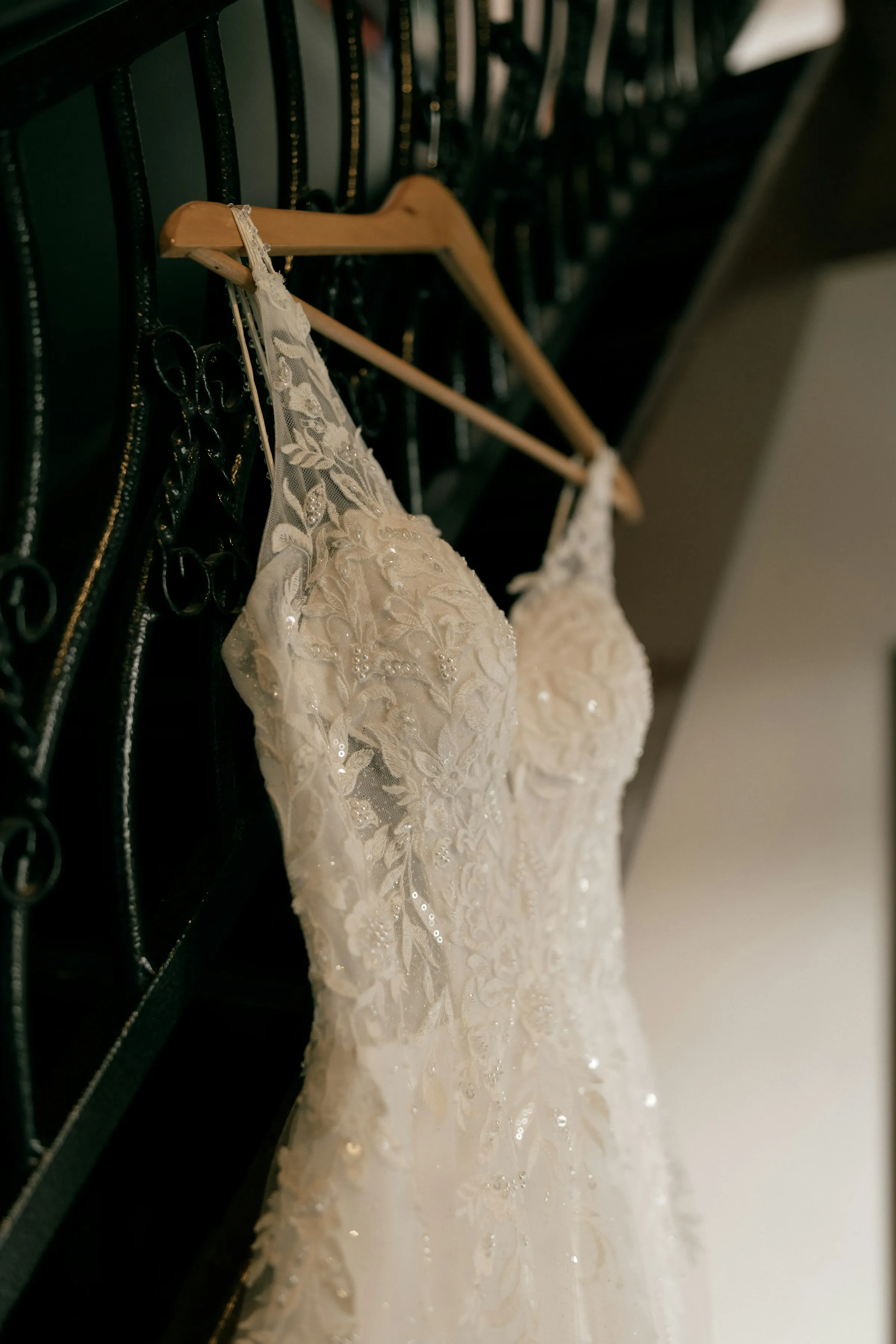
It’s a familiar scene after any outdoor Toronto wedding: a gown comes in a few days after the ceremony with grass stains running the length of the hem, a wine splash near the waist from a toast, and the underside of the train gone from ivory to grey after an evening on the garden aisle. Often it’s been folded in the garment bag it came in since the reception ended. That detail matters more than any of the stains.
Why the first 48 hours matter
An outdoor wedding is hard on a dress in ways an indoor reception isn’t. Grass stains are plant pigment that bonds to fibres fast, wine and food stains set as they dry and oxidize, and dirt ground into a hem during an outdoor ceremony or golden-hour photos acts almost like sandpaper against delicate fabric if it sits there. None of that damage happens all at once at the wedding. It happens in the days after, while the dress sits folded in a bag waiting for someone to deal with it.
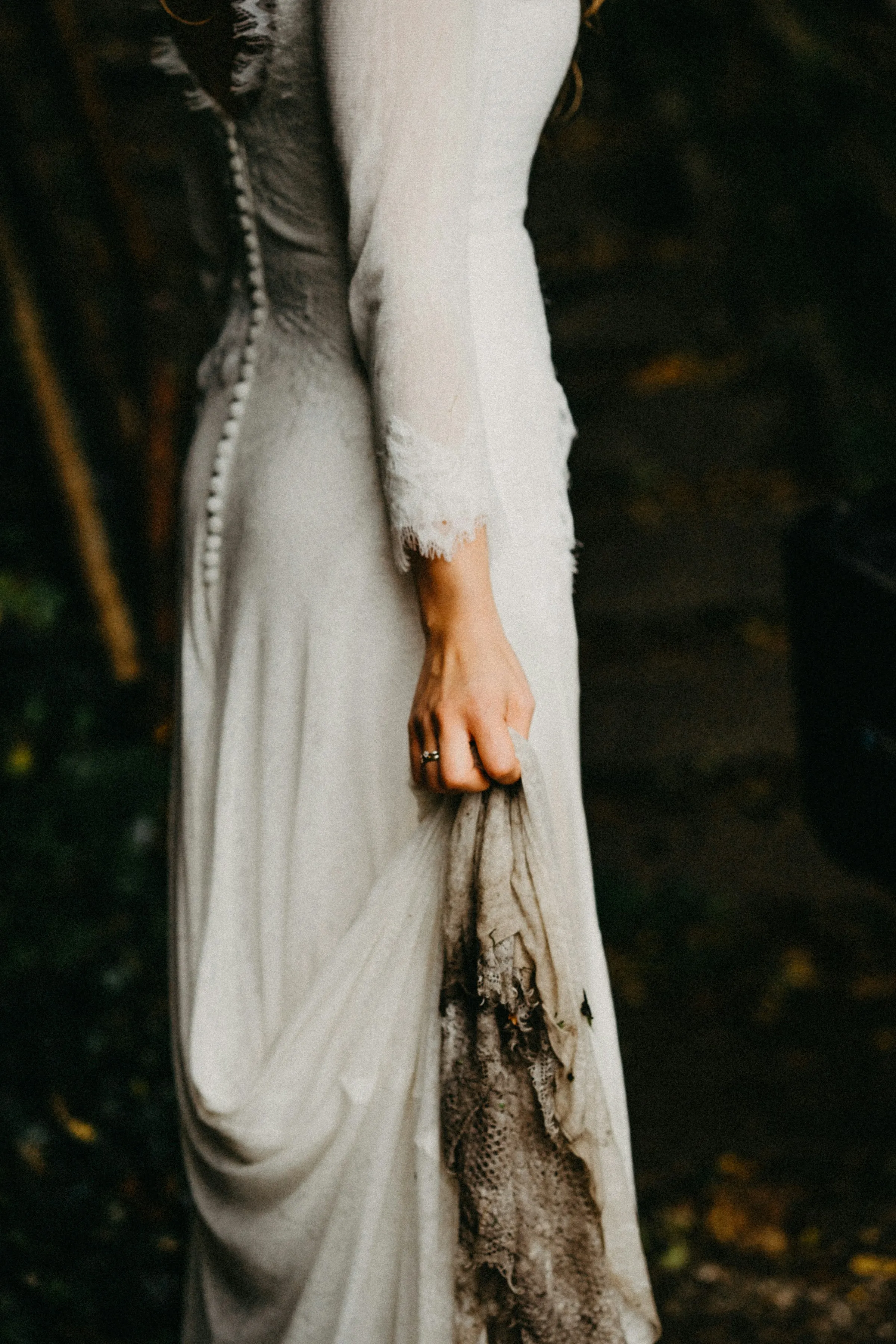
Heat and time are what turn a treatable stain into a permanent one. A grass stain that’s a few hours old responds to solvent-based treatment; the same stain a week later, after it’s been folded against itself in a warm garment bag, has often bonded to the fibre for good. That’s why we tell every bride the same thing: the sooner it comes in, the better the outcome, and there’s very little downside to bringing it in fast.
What to do before it gets to a cleaner
You don’t need to treat anything yourself, and you shouldn’t try. But how the dress is handled in the meantime makes a real difference:
- Don’t let it sit folded. Hang it if you can, even on a regular hanger overnight. Folding presses stains into the fabric and creases delicate layers like tulle and organza.
- Skip the plastic garment bag. Fabric needs to breathe. A sealed plastic bag traps moisture against stains and can lead to mildew or yellowing before the dress ever reaches us.
- Don’t scrub, blot, or apply anything from home. Water, stain sticks, and home dry-cleaning kits can set a stain permanently or damage silk, lace, and beading that need a specific solvent and technique.
- Don’t wait for “the right time.” Brides often plan to deal with the dress after the honeymoon. Every day it sits is a day the stains have to set further.
- Book the pickup before you leave for the honeymoon, if you can. We can coordinate pickup directly from the hotel the morning after, so it’s off your plate on the way to the airport.
What professional cleaning actually does differently
A wedding gown isn’t cleaned the way a shirt is. At Luna Dry Cleaning, every dress that comes in gets inspected individually, stains are pre-treated by hand at the hemline, underarms, and neckline before anything else happens, and the gown is cleaned alone, never with other garments, using a solvent process suited to whatever mix of silk, satin, lace, tulle, or beading the dress is made of. It’s re-inspected after cleaning, and if anything’s still visible, it’s treated and run again before it goes anywhere near a hanger for pressing.
That’s the difference between a home stain remover and what actually gets grass and dirt out of a hem: the right solvent for the fabric, applied by hand, to the specific stain, before the rest of the dress is touched.
After it’s clean: storing the dress at home

Once the gown is cleaned, how you store it at home still matters. Hang it in a breathable garment bag, not sealed plastic, and keep it out of direct sunlight and away from damp basements or attics where humidity and temperature swings can cause yellowing over time. If you’re storing it long-term, an acid-free garment bag is worth the small investment over a standard plastic one.
Bring it in while the stains are still fresh
If your wedding was in the last week or two and the dress is still sitting in a garment bag, that’s the best time to bring it in. Our Wedding Dress Cleaning service handles everything from grass and dirt to wine, makeup, and yellowing, with pickup available across Downtown Toronto and Scarborough. New customers get 10% off their first order, gown included.