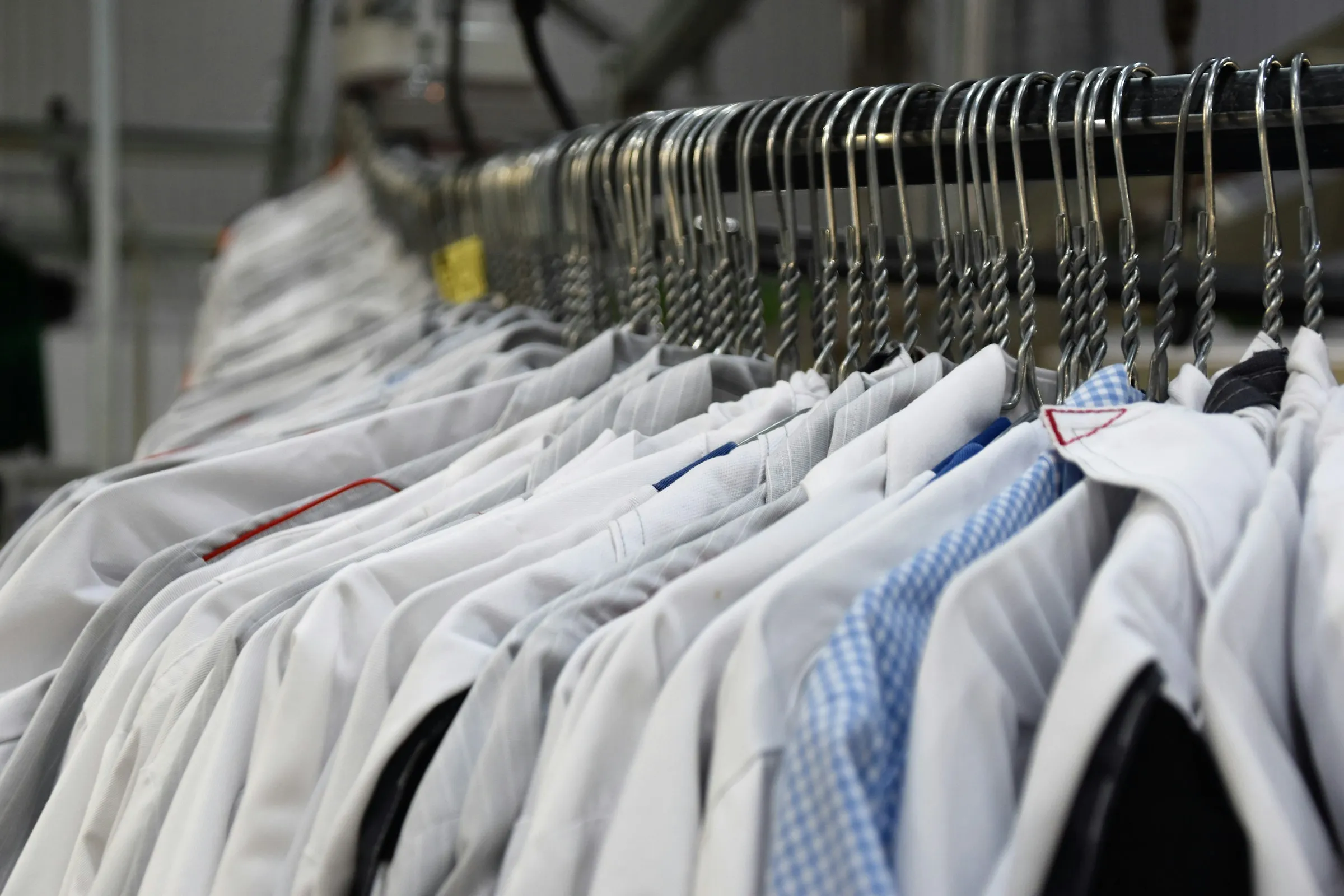
“Eco-friendly dry cleaner” gets used loosely in Toronto. Some shops mean they’ve switched solvents. Others mean they recycle hangers. The difference matters if you’re bringing in clothes for a family member with allergies, or you just don’t want your favourite sweater coming home smelling like a chemical plant.
What “eco-friendly” should actually mean
At a minimum, it means the shop has moved away from perchloroethylene (perc), the solvent that gave dry cleaning its reputation for harsh fumes. Perc is effective, but it’s classified as a likely carcinogen and lingers in fabric and indoor air long after a garment leaves the store.
We clean with a hydrocarbon solvent, a petroleum-based alternative to perc that isn’t classified as a likely carcinogen. It’s just as effective, too: hydrocarbon solvent handles the same range of stains and fabrics as perc-based cleaning, and your clothes come back smelling like clean fabric instead of a dry cleaner. A genuinely eco-friendly cleaner pairs that switch with:
- Equipment that filters and reuses solvent instead of venting it
- Lower-temperature pressing that cuts energy use without leaving clothes creased
- Packaging that skips excess plastic
Not every eco-friendly cleaner uses the same approach. Some use wet cleaning, a water-based process with no solvent at all, others use silicone-based solvents. We use hydrocarbon cleaning across the full range of dry-clean-only fabrics we handle.
Better for your clothes, too
The environmental case gets most of the attention, but the fabric case is just as real. Perc is a harsher solvent, and repeated cycles through it can dull colour and break down delicate fibres over time. Hydrocarbon cleaning is gentler on natural fibres like wool, silk, and cashmere, which is part of why garments cleaned this way tend to hold their colour and shape through more cycles instead of looking tired after a season or two.
It’s also why the process isn’t one-size-fits-all. Wool, silk, and cashmere each call for a different solvent exposure and press temperature, and pieces with buttons, zippers, or beaded trim get treated by hand instead of run through a standard cycle. Treating each garment that way, rather than defaulting to whatever’s fastest, is what actually extends its life, and a piece that lasts longer is one you’re not replacing.
Why it’s safer for families and pets
Solvent residue doesn’t stay on the hanger. It transfers to skin, bedding, and upholstery, and pets in particular spend a lot more time with their faces close to the floor and furniture where residue settles. A gentler solvent means less of that exposure, and it’s part of why we made the switch: clothes that are tough on stains but kind to the fabric and the people wearing it.
Still convenient, still affordable
Switching solvents shouldn’t mean giving up the parts of dry cleaning that make it worth using in the first place. We still pick up and deliver to your door across Downtown Toronto and Scarborough, so the greener option doesn’t cost you an extra errand. It’s not a separate premium tier either, it’s how we clean everything, so there’s no upcharge.
Where to bring your clothes
Whether you’re looking for eco-friendly dry cleaning in Toronto’s downtown core or in Scarborough, we clean with the same hydrocarbon-based process at both locations, whether it’s an everyday work shirt or a piece you’ve been putting off. If you want the details on how we handle specific fabrics and garments, our dry cleaning page walks through the full process.